
Dental Implant Crown Care
Post-Operative Instructions for Long-Lasting Results
Dental Implant Crown Care
|
Expert Implant Maintenance Tips
|
Prevent Infection & Loosening
|
Long-Term Stability
|
Professional Follow-Up Matters
Dental Implant Crown Care | Expert Implant Maintenance Tips | Prevent Infection & Loosening | Long-Term Stability | Professional Follow-Up Matters
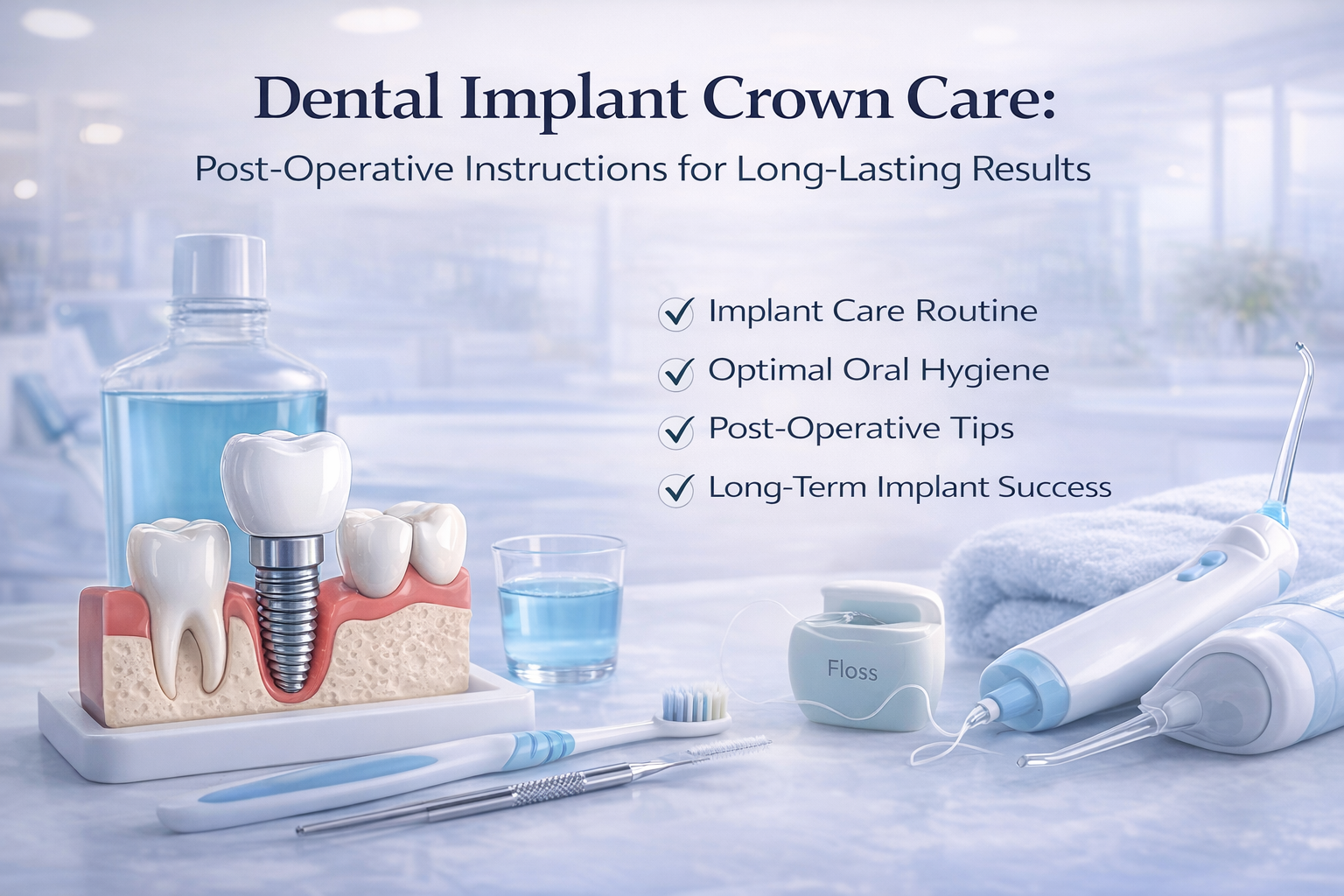
Dental implants are one of the most reliable and long-lasting solutions for replacing missing teeth. However, the success of your treatment does not end with implant placement. Proper dental implant crown care and consistent maintenance play a crucial role in ensuring long-term stability, gum health, and overall implant success.
If you’ve recently received an implant crown, here’s what you need to know.
Why Does My Implant Feel Different?
After your dental implant crown is fixed, it may initially feel slightly different from your natural teeth. This is normal.
Unlike natural teeth, dental implants do not have periodontal ligament fibers that provide cushioning. Because of this, you may notice:
A mild pressure sensation while chewing
Slight heaviness around the implant area
Temporary bite awareness
These sensations typically settle within a few days as you adapt to your new crown.
If discomfort persists beyond a few days, it’s advisable to consult your implant specialist for evaluation.
What to Eat After Getting a Dental Implant Crown
Your implant crown is strong and durable, but it’s best to allow a short adjustment period.
Recommended (First Few Days)
Soft foods
Gentle chewing
Chewing on the opposite side if advised
Avoid
Hard foods (ice, nuts, hard candies)
Sticky foods (gum, caramel)
Excessive biting pressure
Protecting your implant crown during the early days reduces unnecessary stress and promotes long-term durability.
Daily Dental Implant Crown Care Routine
Proper oral hygiene is essential to prevent infection and ensure implant longevity.
Although dental implants cannot develop cavities, the surrounding gum tissue can become inflamed if plaque accumulates.
Follow These Implant Maintenance Steps:
Brush twice daily with a soft-bristle toothbrush
Clean gently around the gumline
Floss daily using implant-safe floss or interdental brushes
Consider using a water flosser for improved plaque removal
Rinse with an antibacterial mouthwash if recommended
Neglecting oral hygiene can lead to peri-implantitis, a condition that affects the tissues around the implant and may compromise its stability.
Consistent cleaning is the key to long-term implant success.
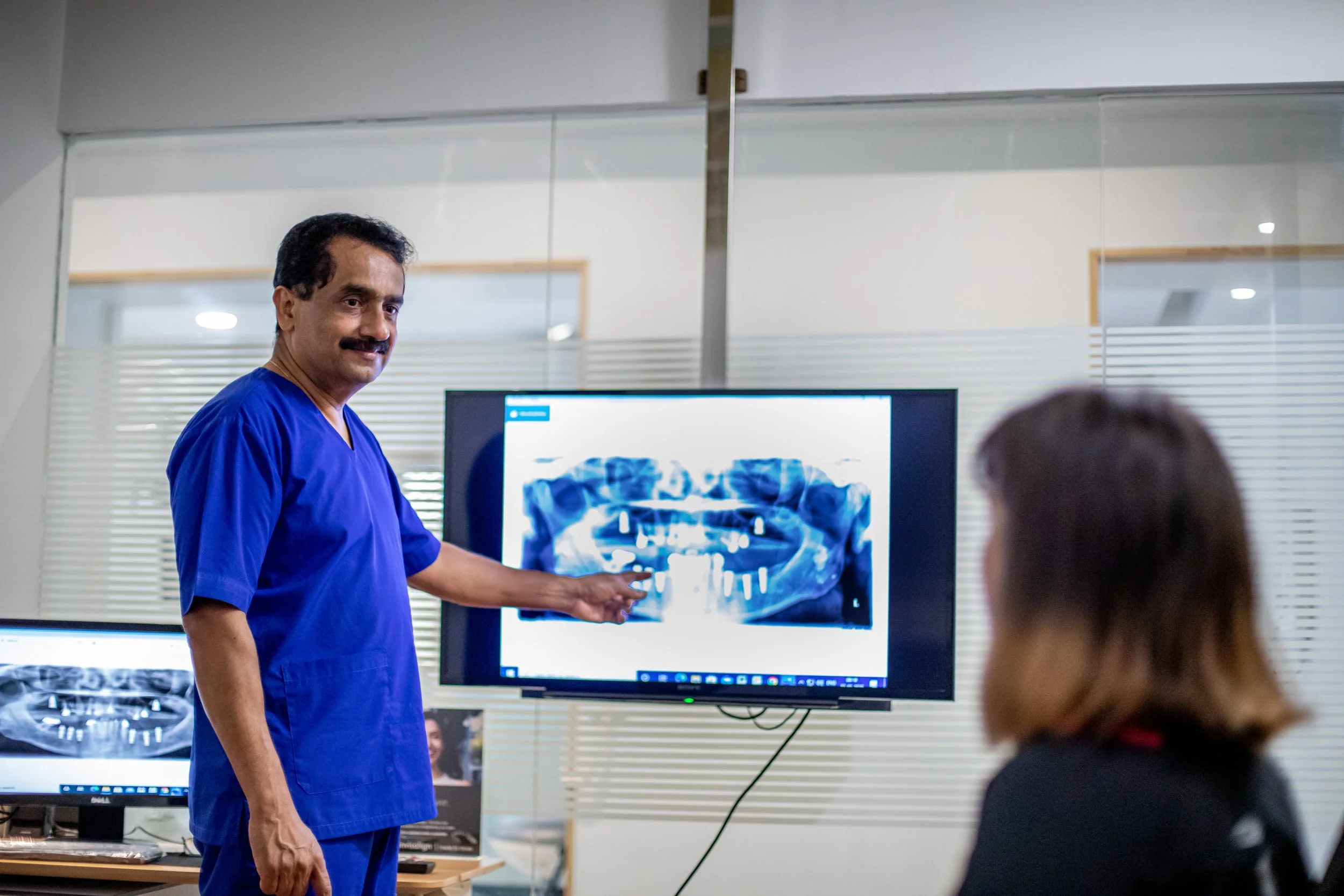
Comprehensive dental implant evaluation and crown stability assessment during a specialist consultation, ensuring precise bite alignment, healthy surrounding tissues, and long-term implant success through expert monitoring and follow-up care.
Professional follow-up consultations help detect early signs of implant complications and maintain crown stability.
Signs You Should Contact Your Dentist
While mild sensitivity after crown placement is common, contact your dentist immediately if you notice:
Persistent pain
Swelling around the implant
A loose implant crown
Difficulty biting
Bleeding gums near the implant
Early intervention helps prevent complications and protects your investment in implant treatment.
Why Regular Implant Check-Ups Matter
Routine dental visits are critical after implant treatment.
At your follow-up appointments, your dentist will:
Evaluate implant stability
Check bite alignment
Examine gum health
Perform professional cleaning
Scheduling check-ups every six months significantly increases the lifespan of your dental implant crown.
If you are in Indiranagar or Bangalore, regular professional monitoring ensures your implant remains healthy and functional for years.
How Long Does a Dental Implant Crown Last?
With proper dental implant crown care and routine maintenance, implant crowns can last many years — often decades.
Longevity depends on:
Oral hygiene habits
Regular dental visits
Overall gum health
Lifestyle habits such as smoking
Maintaining consistent care is essential for preserving both function and aesthetics.
Frequently Asked Questions About Dental Implant Crown Care
Is cleaning an implant crown different from a natural tooth?
The brushing technique is similar, but extra attention is required around the gumline to prevent plaque buildup.
Can an implant crown become infected?
Yes, poor oral hygiene can lead to peri-implantitis, which affects the surrounding tissues.
What causes an implant crown to loosen?
Crown loosening can result from bite imbalance, screw loosening, or excessive pressure. Early adjustment usually resolves the issue.
How often should I get my implant checked?
Every six months, or as recommended by your implant specialist.
Final Thoughts on Dental Implant Maintenance
A dental implant crown is designed to restore your smile, comfort, and chewing efficiency. With proper aftercare, professional monitoring, and consistent hygiene practices, it can serve you reliably for many years.
If you have any concerns about your implant crown or require a follow-up evaluation, schedule a professional consultation to ensure continued implant stability and oral health.
Your long-term implant success begins with proper care.