What Are Wisdom Teeth?
Wisdom teeth are the third set of molars that appear at the back of your mouth, usually between the ages of 17 to 25.
They are the last teeth to erupt and are often not essential for chewing. In many cases, there isn’t enough space for them to grow properly, which can lead to complications.
What is Wisdom Tooth Impaction?
When a wisdom tooth does not have enough space to erupt properly, it may get trapped inside the gum or jawbone or grow at an abnormal angle.
This condition is called impacted wisdom tooth and often requires professional evaluation and treatment.
Symptoms of Impacted Wisdom Tooth
You may notice the following signs if your wisdom tooth is impacted or infected:
Swollen or painful gums
Red or bleeding gums
Jaw pain or swelling
Difficulty chewing or opening your mouth
Bad breath or unpleasant taste
Food getting stuck near back teeth
Decay in nearby teeth
In some cases, there may be no symptoms, which is why regular dental check-ups are important.
How is It Diagnosed?
Your dentist will:
Examine your mouth and symptoms
Take dental X-rays to check the position of the tooth
Evaluate surrounding bone and nearby teeth
This helps determine whether removal is necessary and how the procedure should be planned.
Wisdom Tooth Removal Procedure
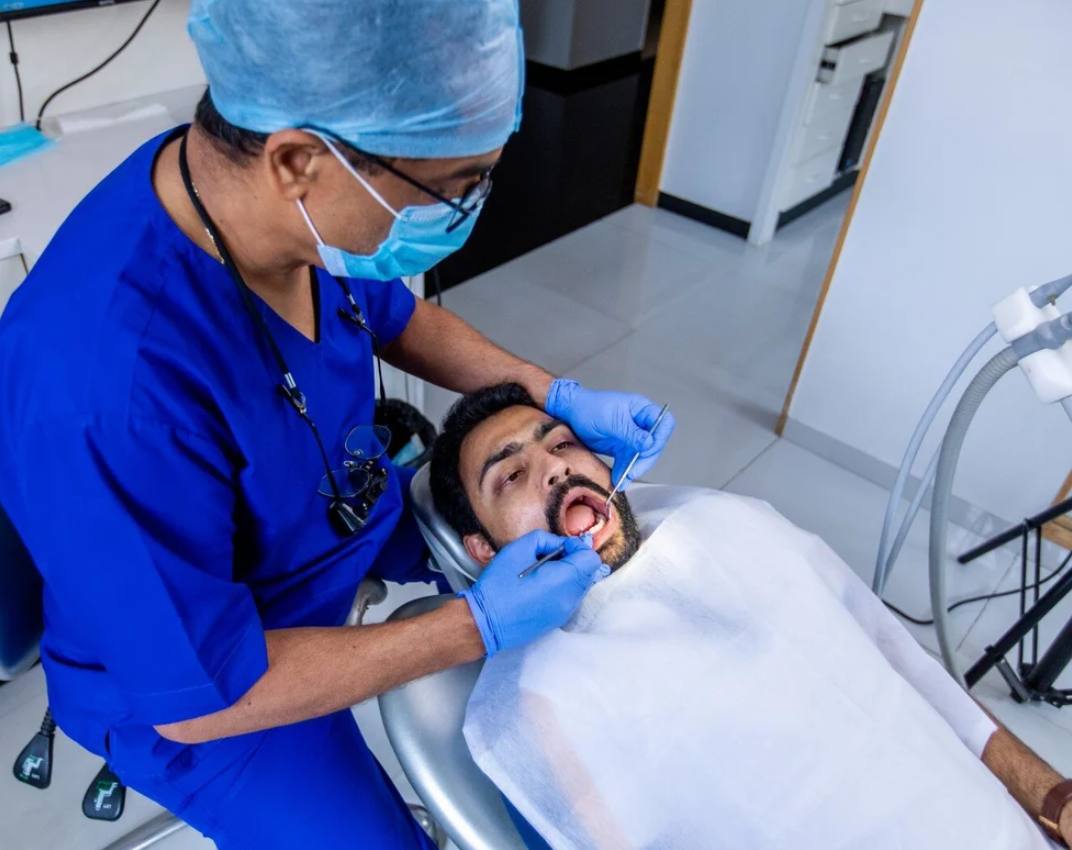
Wisdom tooth extraction is a safe and routine procedure performed under local anaesthesia.
Here’s what to expect:
X-rays are taken to assess the tooth position
Local anaesthesia is given for a painless experience
The tooth is carefully removed
Gauze is placed to control bleeding
In some cases, stitches may be placed to aid healing
The procedure is planned to ensure maximum comfort and minimal discomfort
What Happens If You Don’t Remove an Impacted Wisdom Tooth?
Delaying treatment can lead to:
Infection & Decay
Partially erupted teeth are difficult to clean, increasing the risk of cavities and infection.
Cysts or Damage
Impacted teeth may cause cyst formation or damage surrounding teeth and bone.
Teeth Shifting
Pressure from impacted teeth can affect alignment of nearby teeth.
Early removal helps prevent these complications.
Is Wisdom Tooth Removal Painful?
This is one of the most common concerns.
The procedure itself is not painful, as it is performed under local anaesthesia.
After the procedure:
Mild pain and swelling are normal for a few days
Medications help manage discomfort
Most patients recover within 2–3 days
Following post-treatment instructions ensures a smooth and quick recovery.
Aftercare Tips
Take medications as prescribed
Avoid hard or spicy foods initially
Maintain oral hygiene carefully
Avoid smoking
Follow all post-procedure instructions
Contact your dentist if you experience severe pain or prolonged bleeding.
When Should You Visit a Dentist?
If you experience:
Persistent pain in the back teeth
Swelling in gums or jaw
Difficulty opening your mouth
Don’t delay. Early treatment prevents complications.
Final Takeaway
Wisdom tooth impaction is common—but ignoring it can lead to bigger problems.
Timely diagnosis and treatment can help you avoid pain, infection, and long-term complications.
Book Your Consultation
Dr. C Jagadeesh Dental Clinic
Indiranagar, BangaloreCall or WhatsApp: 8197093444
You can also message us on Instagram at @drcjagadeeshdentalclinic
FAQ
Q: Why are my teeth sensitive to cold?
A: It is usually due to enamel loss or exposed dentin.
Q: Can sensitive teeth be cured?
A: Yes, with proper treatment and care depending on the cause.
Q: Should I ignore tooth sensitivity?
A: No, it can indicate underlying dental problems.